This blog post may contain affiliate links. I may earn a small commission for any purchases made through these links. Click here for the disclosure statement.
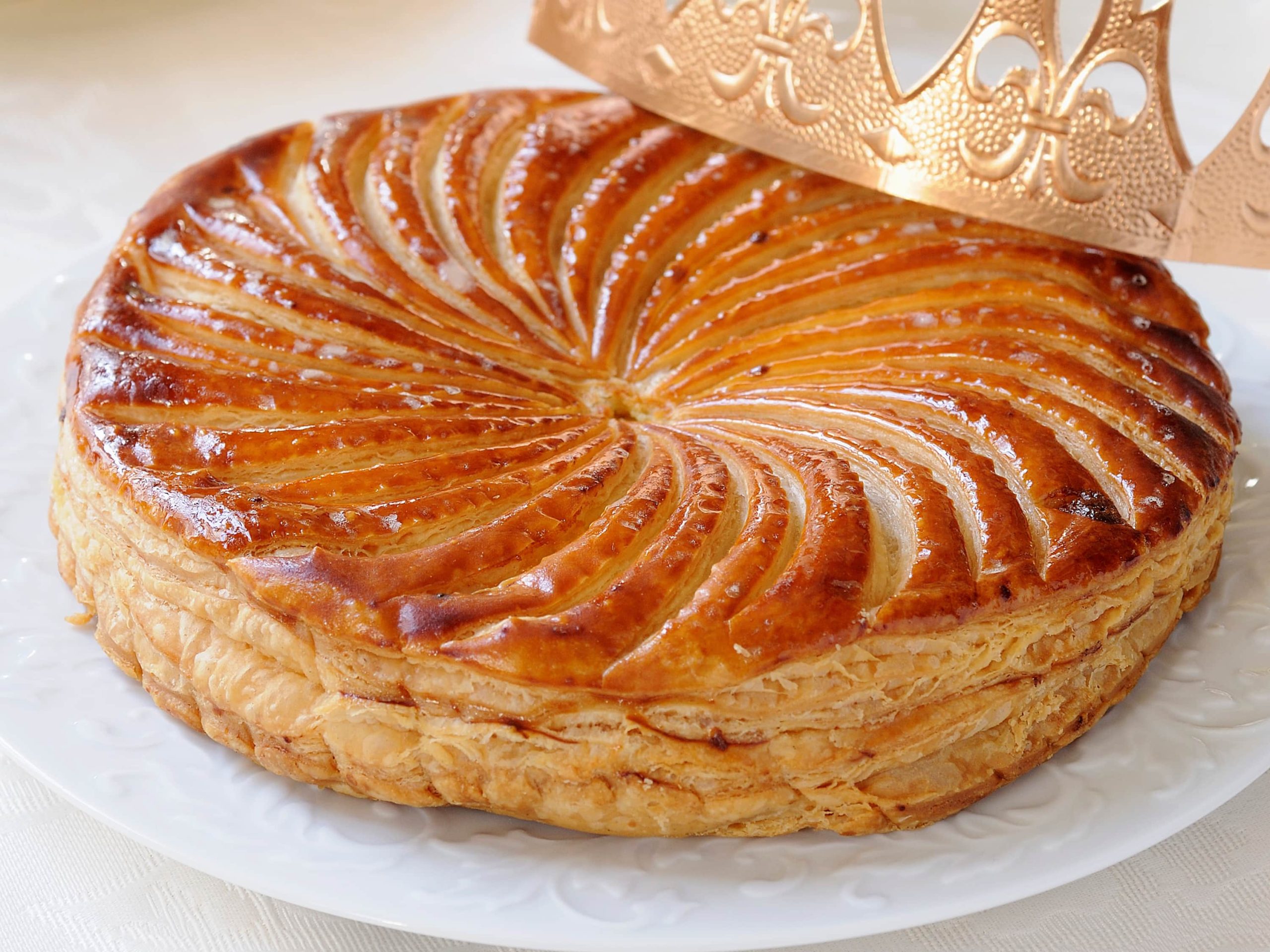
If you happen to visit France in January, you’ll quickly notice bakery windows filled with golden round pastries. These are galettes des rois, or French king cakes, and they’re one of France’s sweetest seasonal traditions.
Every January, families and friends gather to share a galette as part of the celebration of l’Épiphanie (Epiphany). Hidden inside each galette is a tiny surprise, and whoever finds it becomes king or queen for the day.
Here’s everything you need to know about the fascinating history, customs, and etiquette surrounding the galette des rois. And if you’d like to try it yourself, you’ll also find a recipe at the end of this article so you can bring this tasty French tradition into your own home.
What is a Galette des Rois?
Galette des rois literally translates to “cake of the kings”, and it’s traditionally eaten to celebrate the Epiphany on January 6. In France, however, you’ll usually find galettes in bakeries throughout the entire month.
The galette’s round shape is thought to symbolize the sun, representing the return of longer days after the winter solstice.
The classic French version consists of two layers of flaky puff pastry filled with rich almond cream known as frangipane. After baking, the pastry develops a crisp, golden exterior that goes deliciously with the creamy filling inside.
Although France is all about her traditions, many bakeries also put their own spin on the traditional recipe. Alongside the classic almond version, you might see flavors like pistachio, chocolate, apple, pear, hazelnut, or raspberry. I’ve tried many versions, but I have to say, frangipane is my all-time favorite!
Not every region of France celebrates with the same cake though. In Provence and much of southern France, people eat gâteau des rois, a soft brioche ring cake decorated with candied fruit, pearl sugar and orange blossom flavoring. It’s shaped like a crown, symbolizing the crowns worn by the Three Wise Men.
But what really makes the galette des rois special isn’t the pastry itself. It’s the mini surprise hidden inside.
The Hidden Fève
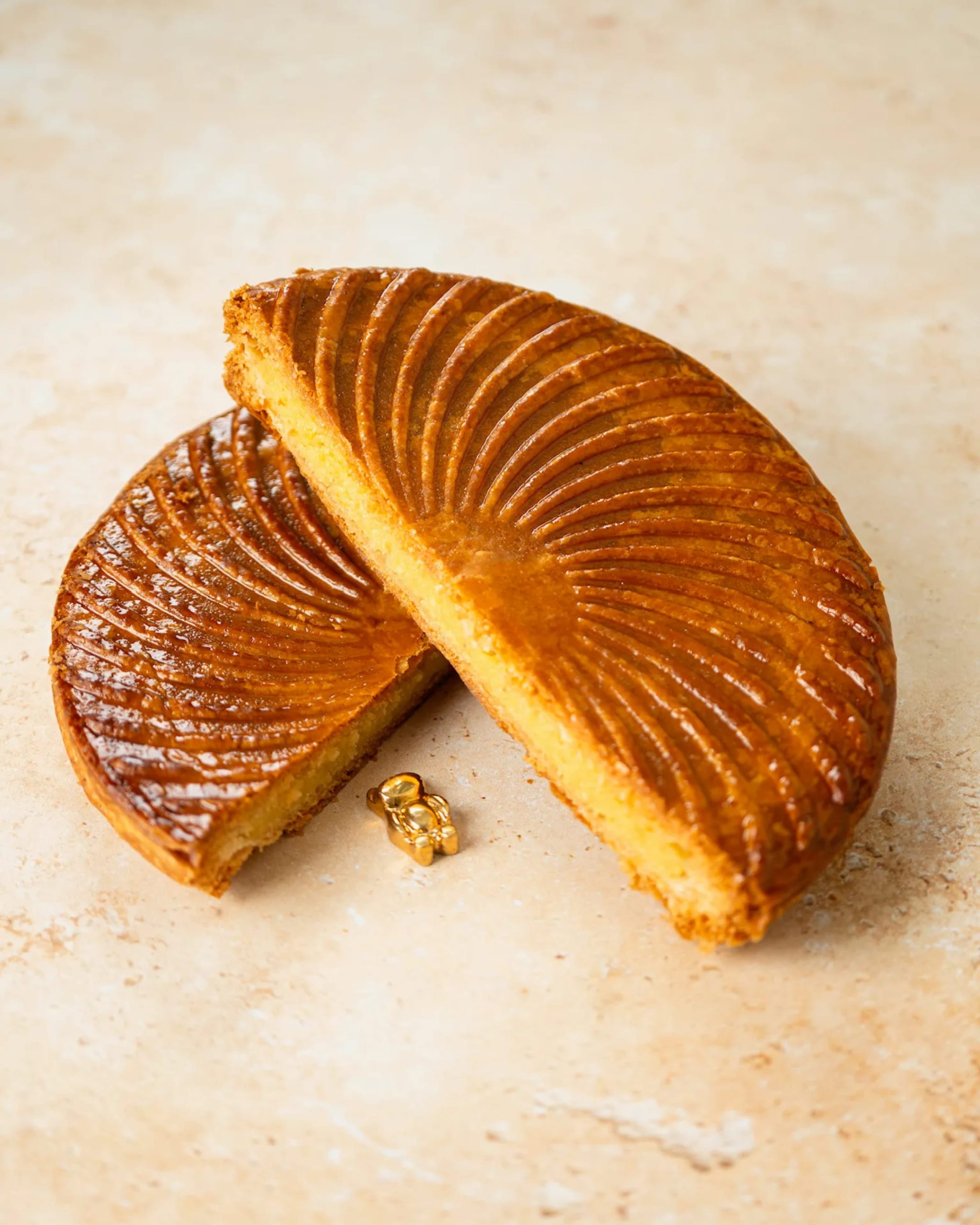
Baked into every galette des rois is a small object called a fève. Originally, this was quite literally a dried fava bean (fève means ” fava bean” in French). During the Middle Ages, the bean served as an inexpensive way to randomly choose one lucky person among those sharing the cake.
Today, the bean has been replaced by a miniature porcelain figurine. Some depict kings, queens, religious figures, famous monuments, cartoon characters, animals, or even collectible items created exclusively by certain bakeries.
Many French people enjoy collecting these tiny figurines year after year, and dedicated collectors even have their own name: favophiles. I’ve only found the fève twice during my 7 years in France, so my (very small) collection includes a smurf and a little church. Let me know which ones you have!
The tradition has spread far beyond France, too. In Spain and many Latin American countries, the roscón de reyes is popular, while in New Orleans, the yellow, green and purple king cake has become a well-known part of Mardi Gras celebrations. Germany and Switzerland have their own version, called Dreikönigskuchen, that uses an almond as the fève.
History of the Galette des Rois
Many historians trace the tradition of the galette des rois to Saturnalia, an ancient Roman festival honoring the god Saturn.
During Saturnalia, masters and servants temporarily exchanged roles, and a bean hidden inside food determined who would become the “king” of the festivities for the day.
As Christianity spread across Europe, many pagan winter customs gradually merged with Christian celebrations, eventually becoming associated with Epiphany, the Christian feast celebrating the visit of the Three Wise Men to the baby Jesus.
By the Middle Ages, the tradition of sharing a special cake for Epiphany was well established across France. Over time, however, the religious significance became less important.
Today, people of all backgrounds or beliefs enjoy the galette des rois. Schools, offices, sports clubs, neighborhood groups, and families all organize galette gatherings throughout January. In many ways, it marks the final celebration after Christmas and New Year’s before everyday life resumes in France.
How the Tradition Works
Here’s exactly how to serve and share a galette des rois like the French.
First, everyone gathers around the table, and the galette is cut into as many slices as there are guests. This is important to ensure that someone finds the hidden fève!
Before serving, the youngest person traditionally crawls underneath the table. Without seeing the slices, they call out the name of the person who should receive each piece. This makes sure nobody can purposely choose the slice with the fève.
Then, everyone starts to eat. The suspense really builds as people chew slowly, inspecting each bite for the tiny figurine.
Eventually someone discovers the fève inside their slice (maybe they’ve felt it with their fork or notice it’s already in their mouth)! That lucky person is crowned king (roi) or queen (reine) for the day. Most galettes sold in France even come with a gold paper crown inside the box that the “winner” gets to wear.
There’s another unwritten rule in many families and friend groups as well. Whoever finds the fève buys the next galette des rois for the next gathering. That way, the celebrations continue throughout January, and everyone gets another chance at becoming royalty.
Where to Buy Galettes des Rois
Although the galette des rois is traditionally enjoyed for the Epiphany on January 6, French bakeries usually start selling them right after New Year’s Day. They’re most popular during the first two weekends of the month, but you can continue to find them throughout January.
Galettes come in different sizes depending on how many people you’re serving. You’ll usually see options for 4, 6, or 8 portions. I’ve never come across a single-serving or two-person galette, which makes sense (they’re really meant to be shared!).
Prices vary depending on the bakery, size, and ingredients, but they tend to be a little more expensive than other cakes and pastries in France.
Grocery store galettes are usually the most affordable (around €6 to €12). They’re not as good as a bakery galette (at least in my opinion!), but they do the job if you need a convenient option. Picard also does a frozen galette des rois that isn’t too bad either.
For a more traditional experience, I’d suggest you head to your local boulangerie-pâtisserie instead. The quality is usually much better, and you’ll often find more choices when it comes to sizes and flavors. In my experience, prices typically range from around €15 to €35 depending on the bakery.
And if you want to make it a special occasion, many of France’s top pastry chefs (like Cyril Lignac, Christophe Michalak, Pierre Hermé) create their own luxury versions each year. If you have your eye on one of these, it’s worth ordering ahead since some sell out quickly.
Galette des Rois Recipe
I’m no pastry chef, and I don’t have a secret family recipe for galette des rois. I actually don’t know many French people who make their own at home because it’s quite complicated (kind of like making croissants).
That said, if you’re daring enough to try making your own, I’d suggest you check out Cyril Lignac’s galette des rois recipe. He’s one of France’s most well-known pastry chefs, and you can watch him make the cake while following the original recipe in French here.
I’ve also translated the recipe into English below so you can easily make it at home.
Cyril Lignac’s Galette des Rois Recipe
Ingredients
For the galette:
- 2 sheets of puff pastry
- 1 organic egg + 1 egg yolk
- 1 tablespoon water
- 1 fève (small figurine)
For the almond cream:
- 80 g softened unsalted butter
- 80 g powdered sugar
- 12 g cornstarch
- 100 g ground almonds
- 1 organic egg
- 10 g almond milk
For the syrup:
- 100 g granulated sugar
- 100 ml water
Instructions
- In a bowl, mix the softened butter with a spatula until smooth. Add the powdered sugar and mix again. Add half of the cornstarch and almond flour, then gradually incorporate half of the beaten egg. Continue mixing, then add the remaining dry ingredients and the rest of the egg. Pour in the almond milk. Set aside in the fridge.
- Prepare the egg wash: in a small bowl, mix the egg, egg yolk, and water. Refrigerate until ready to use. Combine the sugar and water in a saucepan. Bring to a boil, then set aside. Cut out two circles from the puff pastry using a stainless steel ring mold (18–22 cm in diameter). (For the cleanest cut, use a knife rather than pressing down with the cutter.)
- Preheat the oven to 200°C (390°F). Place a sheet of parchment paper on a baking tray (preferably a perforated one) and lay the first puff pastry disc on top. Using a piping bag fitted with a 12 mm round nozzle, pipe the almond cream in a spiral pattern, starting from the center and leaving a 2 cm around the edges. Place the fève in the center and brush the edges of the pastry lightly with water. Place the second puff pastry disc on top and seal the edges together, making sure there is no air trapped inside the galette. If you have time, chill the baking sheet in the fridge for 2 hours.
- Remove the baking sheet from the refrigerator and flip the galette over. Use a small paring knife to notch the edges. Brush a thin layer of egg wash over the top. Using the small knife, gently score a decorative pattern into the pastry, being careful not to cut all the way through. Bake for 15 minutes, then reduce the oven temperature to 180°C (350°F) and bake for another 45 minutes.
- Once baked, transfer the galette to a cooling rack and brush a thin layer of warm syrup over the top. Allow it to cool slightly before serving. Serves 4.
If you’re lucky enough to be in France during January, don’t leave without trying a galette des rois. I’d highly recommend picking up the classic frangipane version (my personal favorite) from a local bakery or pastry shop. Even if you can’t find someone to share it with, at least you’re sure to be crowned king or queen!
Discover More French Holiday Traditions
- 10 French Christmas Traditions to Try This Holiday Season
- The 20 Best French Advent Calendars of 2026
- How to Celebrate La Chandeleur, France’s Crêpe Day
Have you ever tried galette des rois? Let me know in the comments below.


