This blog post may contain affiliate links. I may earn a small commission for any purchases made through these links. Click here for the disclosure statement.
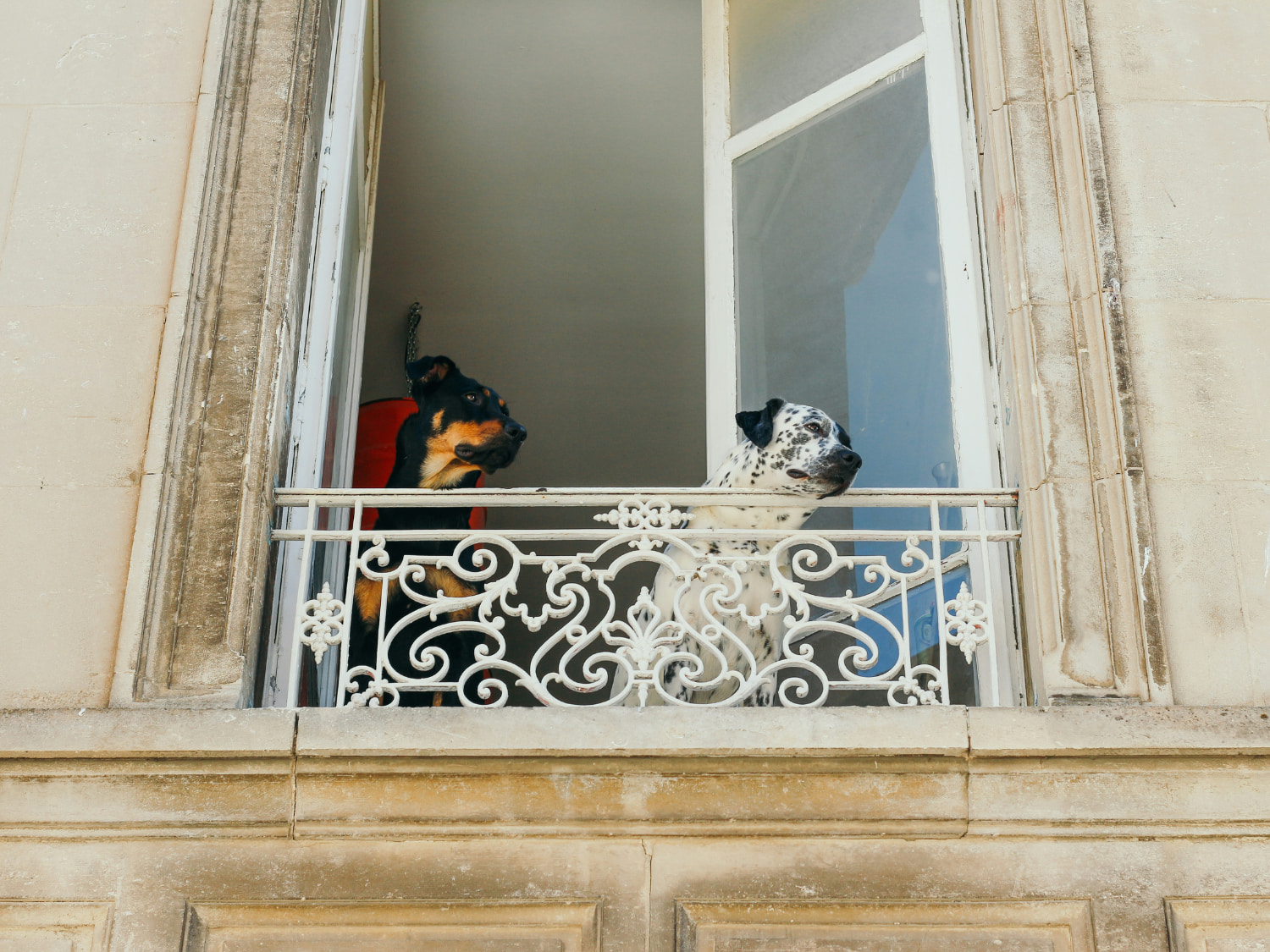
Pet culture looks different everywhere you go. Come to France, and you’ll notice that life with a dog comes with its own set of rules, expectations, and routines.
While many aspects of dog ownership are similar in France and the US, there are a few key differences worth knowing if you’re moving to France or planning to travel here with your pup.
From the paperwork and logistics to everyday etiquette, here’s what to expect when living and traveling with a dog in France. I’ll also share my observations on French dog culture and the unique relationship the French have with man’s best friend.
Is France Dog-Friendly?
France is famously dog-friendly. As much as the French love to mock us Americans for our obsession with dogs, they also have a deep adoration for their four-legged friends.
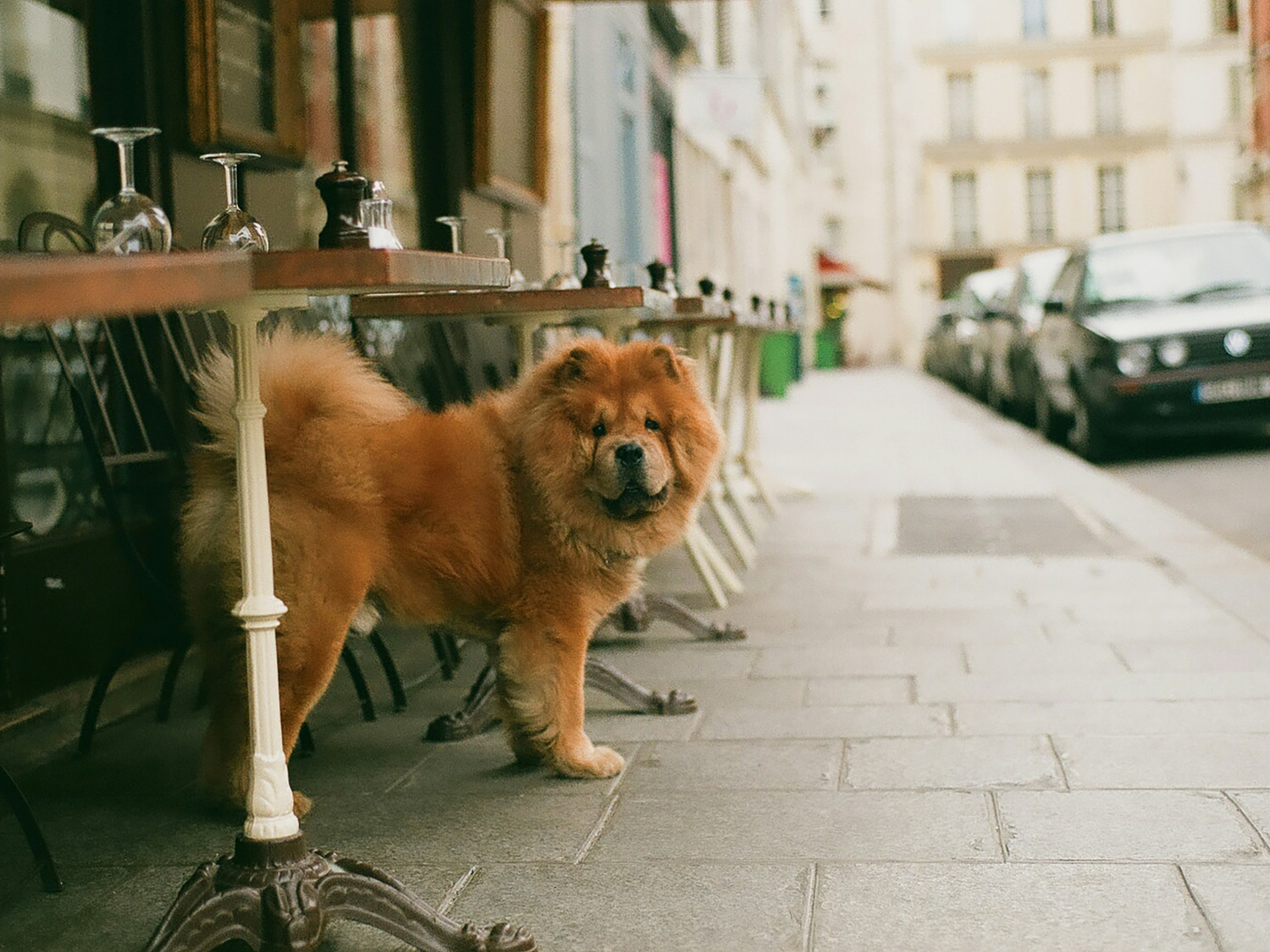
France, in fact, has a large pet-owning population (20% of households own at least one dog) and a culture that treats dogs as part of everyday public life. It’s completely normal to see a dog curled up under a café table, riding along on the metro, or trotting through an outdoor market beside its owner.
There’s no national law banning dogs from most public spaces either. So unless local rules or business owners say otherwise, dogs are welcome in cafés, restaurants, shops and public transport.
That being said, dog-friendly doesn’t mean absolutely no rules. France still has specific requirements for entry, transport, housing, and a short list of banned breeds. We’ll get into all of that below.
Why Do French Dogs Seem So Calm?
After six years of living in France, one thing I’ve noticed is how well-behaved dogs are here compared to the US. And remarkably calm too. Most won’t even glance up if you try to get their attention and almost nothing happening around them seems to faze them.
One reason for this might be the fact that French dogs get far less outside interaction, so they tend to be more reserved and less likely to approach a stranger first. This is very different from American dogs, who are usually highly socialized. In the US, it’s part of the culture to greet other people’s dogs on walks, and the dogs learn to expect (and enjoy) the attention.
There aren’t a lot of loud, yappy dogs in France either. I live in the city center of Strasbourg, come across dogs almost daily, and rarely hear much barking. The one exception is Floçon, my boyfriend’s grandpa’s dog: a small, white-haired senior dog with a bark to match his personality. He’d always bark during meals and regularly need to be let outside. Not a bad dog, just old and mostly deaf.
The French Don’t Have Fur Babies
There’s a big difference in where a dog fits into the family in France versus the US.
In the US, dogs are treated almost as an extra child: baby talk, kisses, furniture privileges, plenty of attention from strangers on walks. The dog might sleep in the same bed as its owner, appear on the family Christmas card, and get its own birthday party.
In France, dogs are loved just as much, but the relationship is more owner-and-animal than parent-and-child. Other than commands, most French people won’t have “conversations” with their canine companions like some Americans I know.
How to Travel to France With a Dog
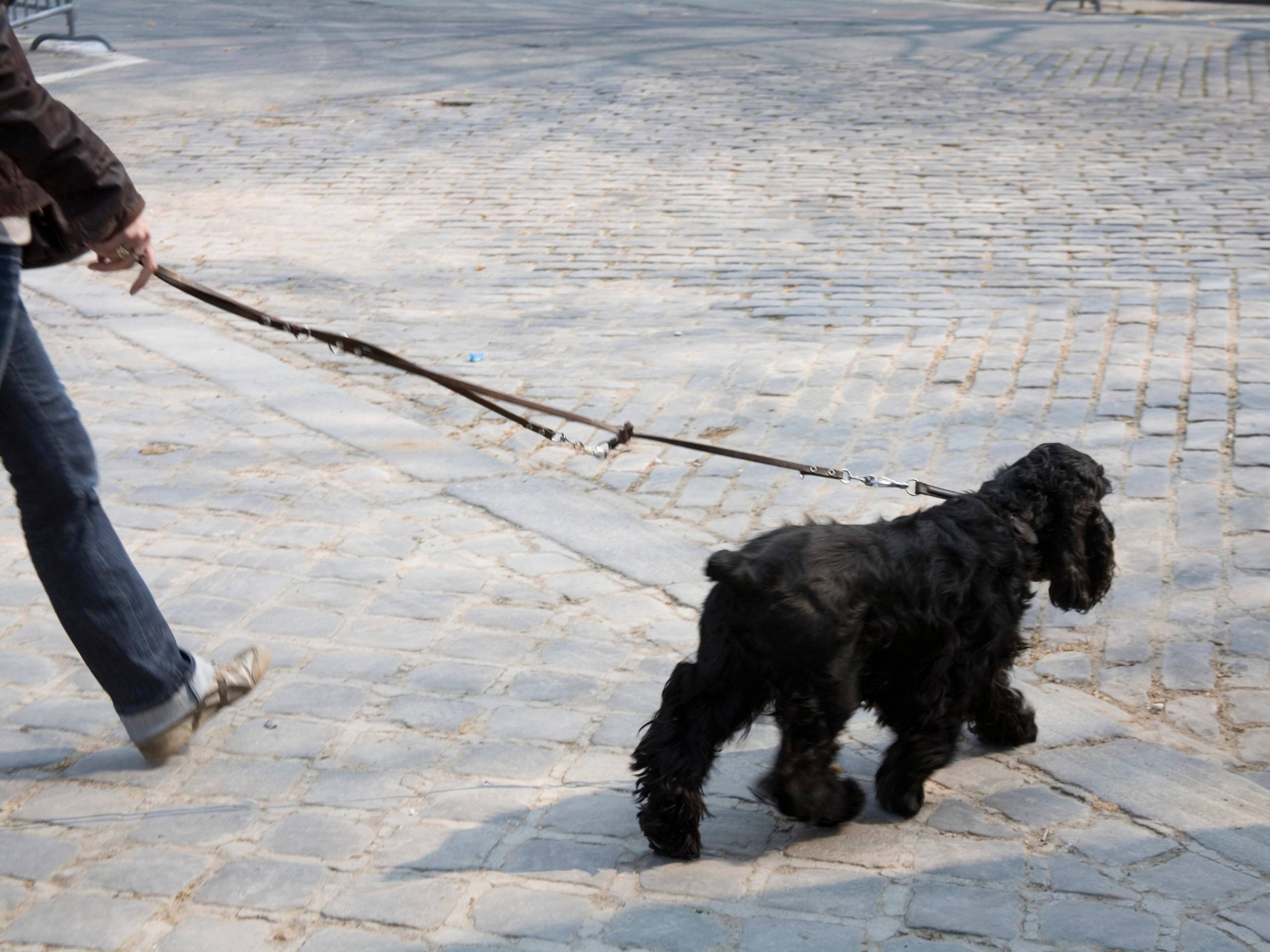
It is relatively simple to bring a dog to France from the US, but preparation is essential. Every dog entering France needs three things:
- An ISO-compliant microchip. It has to be implanted before, or on the same day as, the rabies vaccination. If the chip and vaccination dates don’t line up correctly, the paperwork won’t be accepted.
- A rabies vaccination. If this is your dog’s first rabies vaccination, or a previous one has lapsed, at least 21 days need to pass after the full vaccination protocol before you travel. This waiting period isn’t negotiable, so plan the trip around it, not your flight.
- The correct entry document. If you live outside the EU, you can no longer rely on a standing pet passport. Instead, you need a single-use Animal Health Certificate (AHC) issued by an accredited vet, generally within 10 days of travel, for every trip.
You can find more detailed information on the France customs website.
Moving to France Long-Term With a Dog
Relocating rather than just visiting, and planning to stay more than three months? Your dog needs to be registered with I-CAD, France’s national pet identification database. A French vet handles the registration, and it needs to happen before a French or EU pet passport can be issued for a resident. Consider it a separate step from the entry paperwork above, and budget an extra vet visit once you’ve arrived.
Pet insurance is optional but common, and it tends to be more affordable than equivalent coverage in the US. Civil liability coverage for your dog is often already bundled into standard French home or renter’s insurance, so check your existing policy before buying a separate liability plan.
Transportation with Dogs
France is a country where it is easy to get around, but things become a little more complicated when you have a dog!
Rules may vary slightly by city and transport provider. It is best to check local regulations before attempting any travel with your pets.
Train
On SNCF trains, a small dog must travel in a bag or basket no larger than 45 x 30 x 25cm and be kept on your lap or at your feet. Dogs over 6kg travel at your feet rather than in a carrier and need to be muzzled for the entire journey.
No matter the size of your furry friend, you’ll have to buy a pet ticket that costs around €7. Bring your dog’s identification documents along too, the same way you’d bring your own. SNCF Connect has the full official pet policy if you want to double-check before booking.
Bus
Here in Strasbourg, only guide dogs, assistance dogs, and small breeds kept in a closed carrier are allowed on buses. Larger pet dogs are generally not permitted on city buses. Check your specific city’s transit operator before planning a bus trip with a dog.
Tram
Trams are usually more easygoing than buses. In Strasbourg, dogs (Category 1 breeds aside) can ride any tram at any time with no extra charge, as long as they’re muzzled and kept on a short leash. Small dogs in a closed carrier are usually exempt from the muzzle rule.
Keep in mind that dogs are not allowed on the seats. You should also carry an official identity document for your pet, just like you would for a train.
Dogs in French Restaurants and Cafés
Dogs are often allowed in restaurants and cafés in France. However, it’s always the venue’s call and not a legal guarantee. There’s no French law that bans dogs from cafés, bars, or restaurants, so it really comes down to the owner’s discretion.
In practice, outdoor terraces are almost always dog-friendly. I mean, if people can smoke, is it really an issue to have a dog around?
Indoor seating is often fine too, though it’s polite to ask first. I rarely see dogs at restaurants in France, but when I do, it’s usually a smaller breed at a casual spot rather than anywhere fancy.
Water bowls for dogs are not uncommon either. With the current heatwave hitting us in France, I’ve noticed a lot of restaurants and shops putting water bowls outside their establishments here in Strasbourg.
No “chiens interdits” (dogs not allowed) sign in sight? There’s a good chance your dog is welcome. Guide and assistance dogs are the one exception to all of this. French law requires they be admitted everywhere, no discretion involved.
Some bigger cities in France even have dedicated dog cafés. To treat your pup in the French capital, you might check out Le Bone Appart, Paris’ first dog café.
Renting an Apartment in France With a Dog
French law prevents landlords from banning pets outright in long-term rental leases. There are exceptions, of course. Seasonal and vacation rentals can refuse pets, and category 1 or category 2 dogs may be turned away regardless of lease type.
A landlord choosing between two similar applicants can still pick the one without a dog, so it helps to have your dog’s paperwork in order when you apply.
However, some French people choose not to tell their landlord about their pets before moving in. Whatever you decide to do, it’s important that your dog doesn’t cause damage or noise disturbances in the apartment.
Life With a Dog in France
Food
Check whether your dog’s current food is sold in France before you move. If it’s not, it’s worth transitioning to a brand you can find locally ahead of time rather than after you land. Pet food is widely available through boutique and chain pet stores like Animalis and Maxizoo, online retailers like Zooplus and Zoomalia, French veterinary offices, and most large supermarkets.
Veterinary Care
Vets are easy to find in France, and in larger cities and expat-heavy areas, it’s usually possible to find one who speaks English. It’s also possible to book video consultations online if you need to.
Emergency vet offices are common as well, which is especially good to know if you’re only in France short-term and don’t need a regular vet for your pet.
I own cats rather than dogs myself, but the same system applies either way, and I’ve been genuinely pleased with the quality of care here. Prices are reasonable too. I typically pay around 25 euros per cat for a standard checkup, though it adds up once vaccines, tests, or anything extra gets added on.
Dog Sitting
You can find private dog sitters on apps like Rover as well as local Facebook groups. There are also professional boarding kennels in France. Many of these facilities require vaccines that are standard in France but less commonly given in the US, so check requirements early if you’ll need boarding.
Walking Etiquette
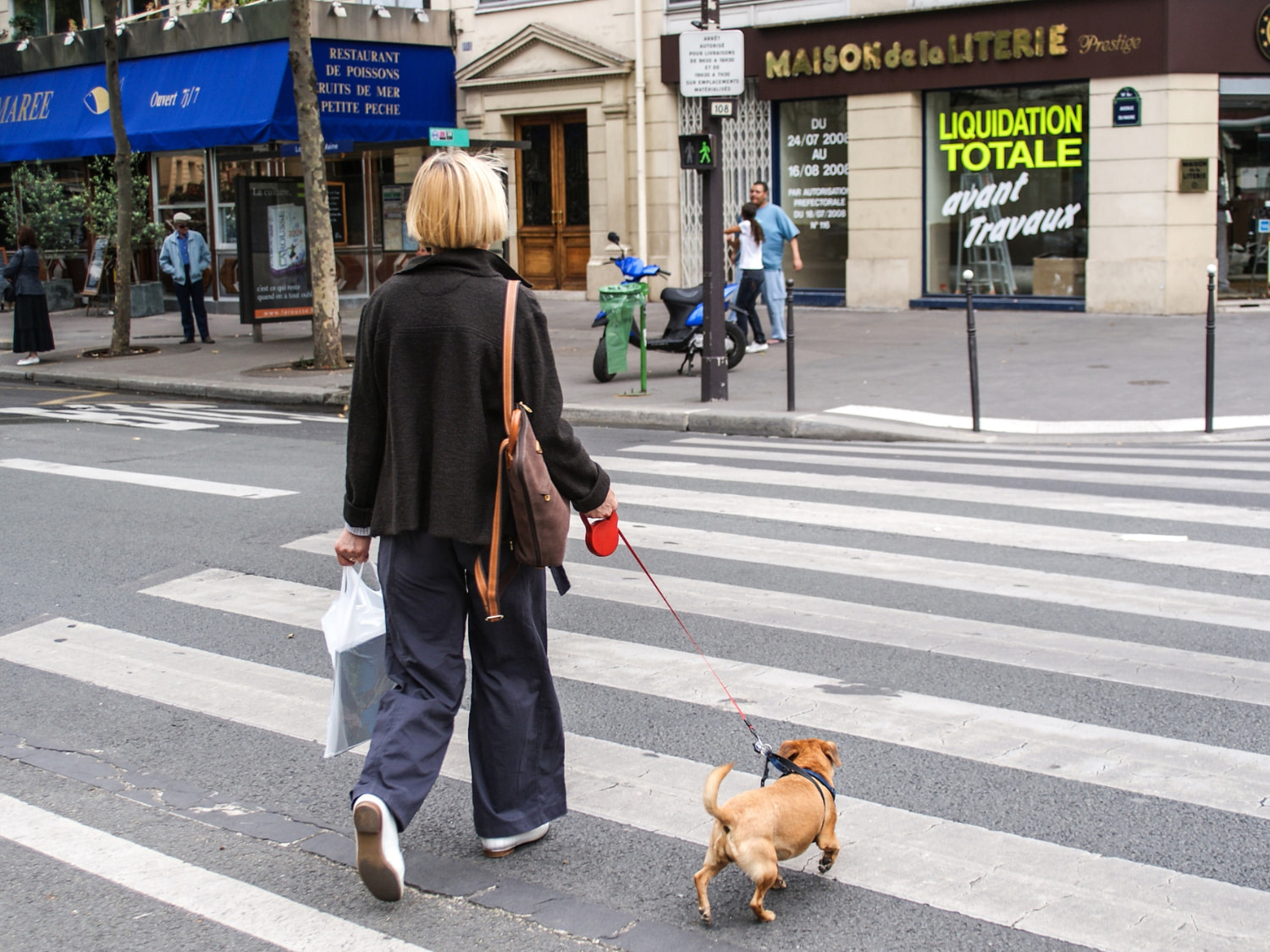
Expect to pass several dogs on any walk around a French neighborhood. And don’t be surprised if many of them are sans a leash. It’s technically against the rules in most public spaces, but plenty of owners let their dogs walk unleashed anyway. The dogs are typically well-trained enough to stay close and ignore distractions.
Most French cities have dedicated dog parks where dogs can run around freely. Here in Strasbourg, the Parc de l’Orangerie has a free dog park. In the rest of the park though, dogs must be kept on a leash, but I often see plenty of them off-leash anyway, especially in the early morning and evening when the park is quieter.
Just outside the city, Doggypark offers roughly 4,200 square meters of off-leash space, and there are a handful of smaller fenced dog areas scattered around the city too.
Another tip: dog waste bags are often provided in public spaces, parks, and along popular walking routes.
Dog Breeds Banned in France
France classifies certain breeds as “chiens dangereux” (dangerous dogs), split into two categories.
- Category 1 covers attack-type dogs without a pedigree, such as certain Pit Bull-type and Boerbull-type dogs. These are the breeds effectively banned in France, and they generally can’t be imported at all.
- Category 2 covers guard and defense breeds, including American Staffordshire Terriers, Rottweilers, and Tosas. These are restricted rather than banned.
Category 2 owners typically need to handle several extra steps: registering the dog with the local town hall (mairie), carrying mandatory liability insurance, keeping the dog muzzled and leashed in public, and in some cases completing a behavioral evaluation.
Requirements can vary by municipality, so if your dog’s breed sits anywhere near these categories, confirm the current rules with the mairie where you’ll be living, or with the French consulate before you book travel.
What Are the Most Popular Dog Breeds in France?
With around 7.5 million dogs in the country, France has plenty of favorites. Rankings vary by source and year, but the Chihuahua, Labrador Retriever, and German Shepherd consistently come out near the top, with the Golden Retriever and Australian Shepherd close behind.
City dwellers tend to lean toward smaller, apartment-friendly breeds like the Chihuahua and French Bulldog, while families in the countryside are more likely to have a Labrador or German Shepherd.
Something else that’s interesting: in the US, there’s less emphasis on getting a purebred dog. Adopting a rescue (mixed breed included) is generally seen as the preferable, even most moral route. There is much more emphasis on rescuing an animal and giving it a loving home.
In France, it’s more so the opposite. Most dogs are a specific, easily identifiable breed, which reflects a different approach to getting one in the first place. In France, a dog is typically bought: you go to a breeder or a shop that has the type of dog you want. Of course, there are many options to adopt here. I have a few French friends who chose to adopt over shopping for their pet.
Naming Your Dog in France
If your dog is a pedigree, registered with the Livre des Origines Français (LOF), the French Kennel Club’s official stud book, its name has to start with a specific letter, and that letter changes every year.
The system dates back to 1926, run by the Société Centrale Canine. Each year gets its own letter (except for K, Q, W, X, Y, and Z) to keep names easy to pronounce and record. Every LOF-registered puppy born that year gets a name starting with it. It’s why French breeders and vets can often guess a purebred dog’s age just from its name!
For 2026, the official letter is B, so any LOF-registered puppy born this year needs a name starting with B: could be Bella, Bandit, Bianca, Baxterm etc.
The rule only applies to pedigree dogs going through LOF registration. If your dog isn’t LOF-registered, whether it’s a mixed breed or a purebred you’re just not registering, the name is entirely up to you!
Dog Fatigue in France
There’s a growing trend of dog fatigue on social media. People complaining about dogs (more often their owners) and the effects of dog ownership on society at large. It’s a particular problem in the US, where some owners treat their pets like people…and expect everyone else around them to do the same.
In France, there’s much less of the all-consuming dog mania you’ll find elsewhere, so there isn’t a lot of fatigue to speak of. The French do love to complain, though, so you’ll always find someone who’d rather not share a sidewalk or a terrace with someone else’s dog.
In my own experience, the only place I’ve personally gotten tired of seeing dogs is in certain stores. I’d never seen a dog inside a shop in my early years here, but this year alone, I’ve seen dozens of dogs wandering through boutiques, and even grocery stores on occasion.
What’s shocked me the most is seeing dogs in nice department stores like Galeries Lafayette. I’ve spotted three different dogs there alone in the past few months. I’m not sure if it’s tourists bringing their dogs along with a different set of norms, or if things are genuinely shifting here in France, but in some places, it’s probably best to just leave the dog at home.
Restaurants are a different story. I haven’t seen many dogs there at all, probably because the French find food a little too sacred to share with Fido. If anything, I see dogs more often out on terraces, and even then, they’re usually well-behaved: no barking, no sniffing around, no bothering anyone at the next table.
Discover More on French Culture
- What is the French Paradox?
- I Tried Living Like a Stereotypical French Girl
- 10 Incontournable French Classics Everyone Should Read
What do you think about French dog culture? Have you lived or traveled with a dog in France? Let me know in the comments below.


